The 1990s marked the rise of modern perfumery, with an ever-increasing number of new fragrances. It was amid this craze, initiated by the Société Française des Parfumeurs (S.F.P.), that the classification of fragrance families emerged, one of the most popular being the amber-oriental. A recent designation for a rich and complex history dating back thousands of years.
Perfume and Religion
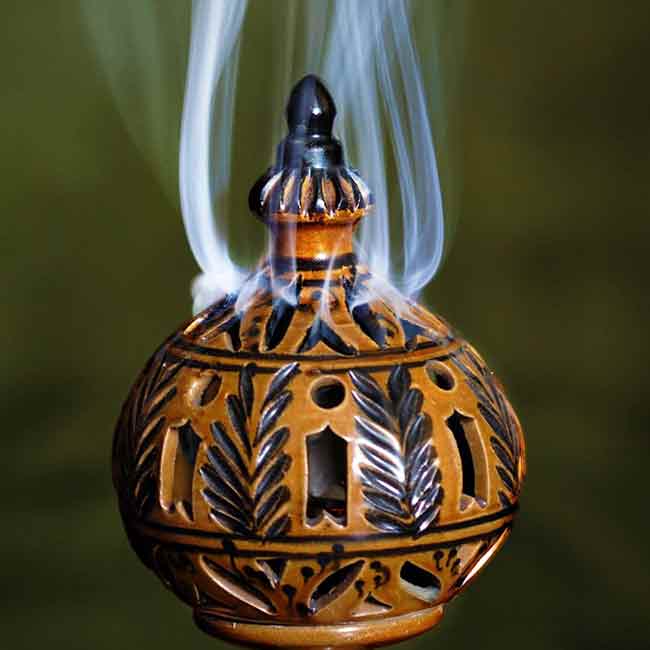
The history of perfume is deeply intertwined with religious rituals, whether in Christianity, Buddhism, or Islam. In ancient times, our ancestors in Mesopotamia (modern-day Iraq and northeastern Syria) concocted various essential oils. These were reserved for the elite due to the use of costly raw materials. Men would apply them to their bodies during religious ceremonies. It was also common to burn resin, or kyphi (incense), to connect with the Divine and, later among the Egyptians, with the afterlife.

A journey through time
Deeply rooted in the culture and traditions of the East, amber-oriental fragrances have stood the test of time and crossed borders. They were originally used for various purposes, notably for seduction among the Eastern nobility. According to Islamic teachings, the use of perfumes is recommended and considered a virtuous practice. People of faith have adopted and continue to adopt the use of perfumes in their daily lives, whether for prayer, celebrations, or simply for well-being. Later, oriental perfumes spread to the West and Europe, particularly through voyages of exploration and international trade.
The Popularization of Oriental Fragrances
With a penchant for novelty and, consequently, for perfumes from the 17th century onward in France, the sweet scents of Oriental fragrances delighted the royalty and nobility of Versailles.
The importance of appearances at court was such that Oriental perfumes were highly prized for their ability to create a strong and, therefore, memorable olfactory impression.
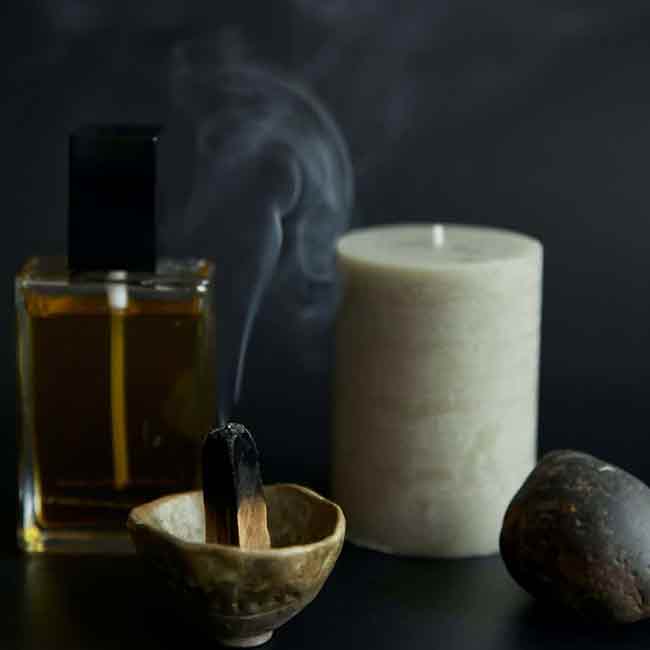
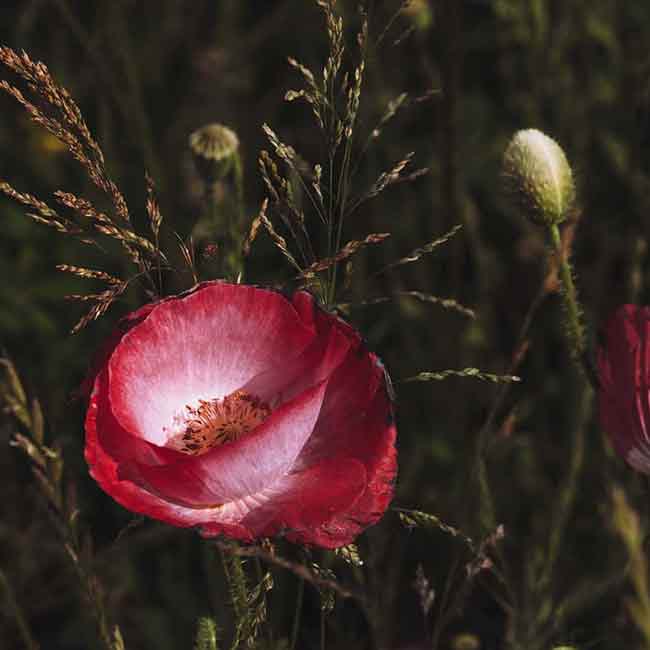
Among their users, one could find the characteristic notes of amber-oriental perfumes, including: resins—such as myrrh and incense among the oldest—woodsy notes like cedar or sandalwood, animalic notes or leathery accords for ambergris or musk, as well as dried plants such as saffron, jasmine, or Damask rose.
Perfumes and Their Success
One of the first successful French amber-oriental fragrances was “Tabac Blond” by Maison Caron. Launched in 1919, it was the first leathery fragrance designed for women.
Another notable example is Pierre Molinard’s famous Habanita (1921), where the innovative use of vetiver in a women’s fragrance sparked much debate. These deliberately unisex and innovative fragrances were a breath of fresh air.
In the 1990s, amber-oriental fragrances continued to inspire perfumers by combining the mellow notes of this family with younger, more seductive notes to create perfumes with fruity, floral, or gourmand facets, as seen in Thierry Mugler’s “Angel.”
Today, amber-oriental fragrances remain a major olfactory family in the perfume industry. From budget-friendly brands to renowned international perfume houses, many companies offer creations increasingly inspired by this family.
Special mention also goes to perfumer Kilian Hennessy for his many creations inspired by the Orient, including “Rose Oud,” “Incense Oud,” and his latest release for fall 2023, “Smoking Hot”—a smoky favorite with licorice notes released by the extraction of fennel in its formula.