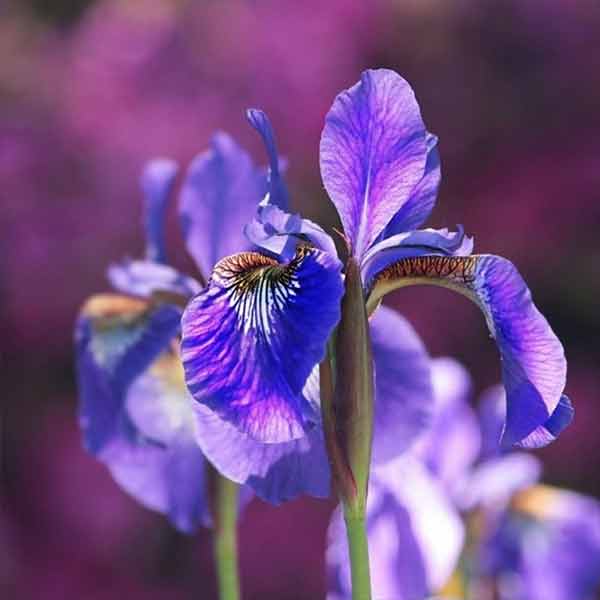
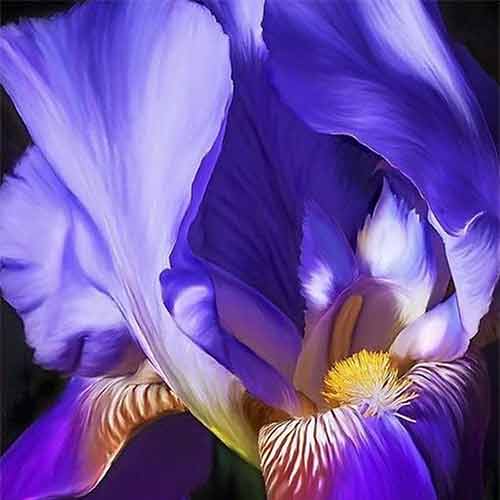
Considered sacred by the Egyptians and often likened to Greek deities, the iris has always held a special place across civilizations. It is often associated with the rainbow because of its iridescent sheen and fascinating natural hues.
Originating from France, China, Italy, or Morocco, this flower is highly prized and widely used in perfumery, often combined with floral, rose, jasmine, or violet notes.
It was Catherine de’ Medici who made it fashionable in the 16th century, notably by wearing gloves scented with wildflowers from Grasse. Also a symbol of royalty since the Renaissance, iris is one of the most expensive raw materials because it must be dried for three years before distillation.
It is therefore a note reserved for prestige perfumeries, found in both women’s and men’s colognes.
Today, the iris accord can be found in fragrances such as Guerlain’s L’Heure Bleue, Chanel No. 19, Hermès’ Hiris, Guess’ Double Dare, and Caron’s Fleur de Rocaille…
The expert's opinion
In a perfumer’s composition, it serves as a base note thanks to its powerful sillage and long-lasting presence.
A white, almost musky note with green or dried fruit undertones, the scent of iris is as mystical as it is captivating.
A noble ingredient that is once again very much in vogue today, iris is a delicate flower with powdery, floral, and slightly woody notes, both powerful and refined.