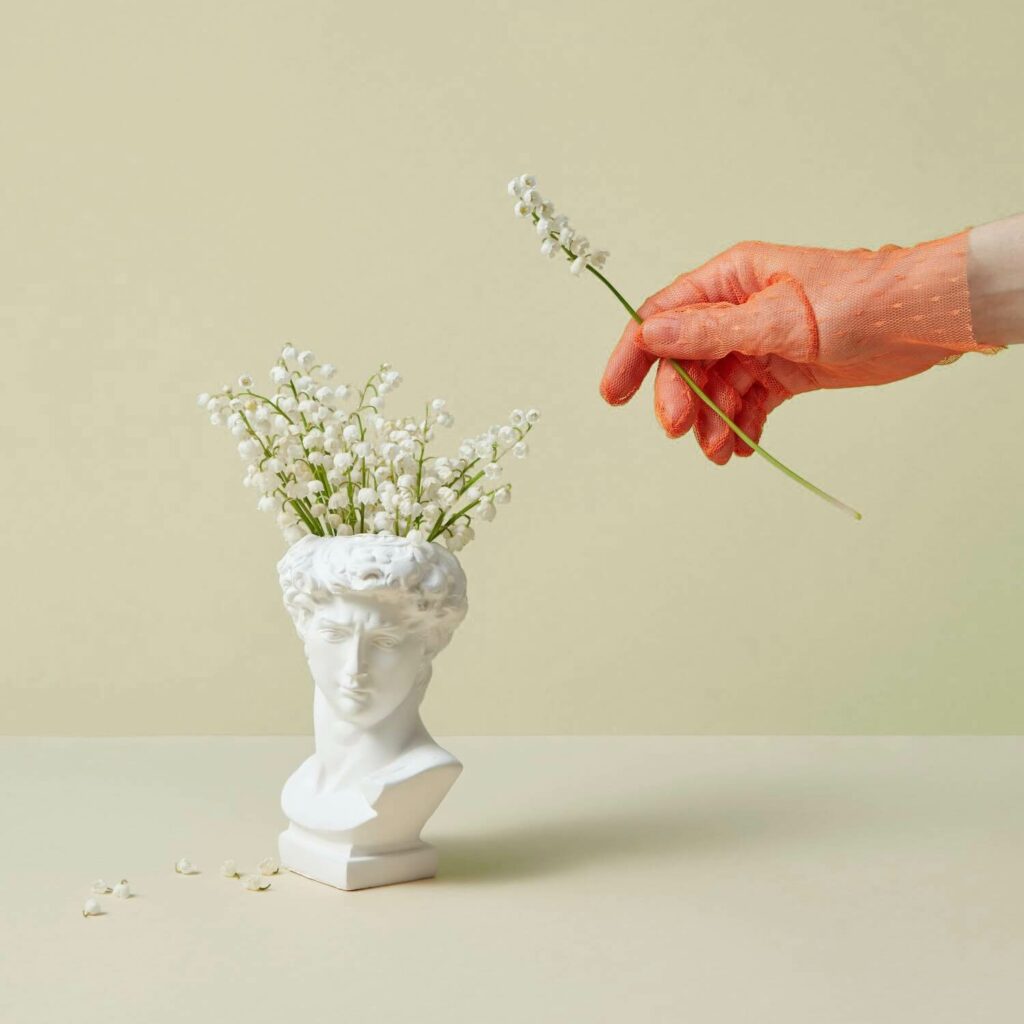
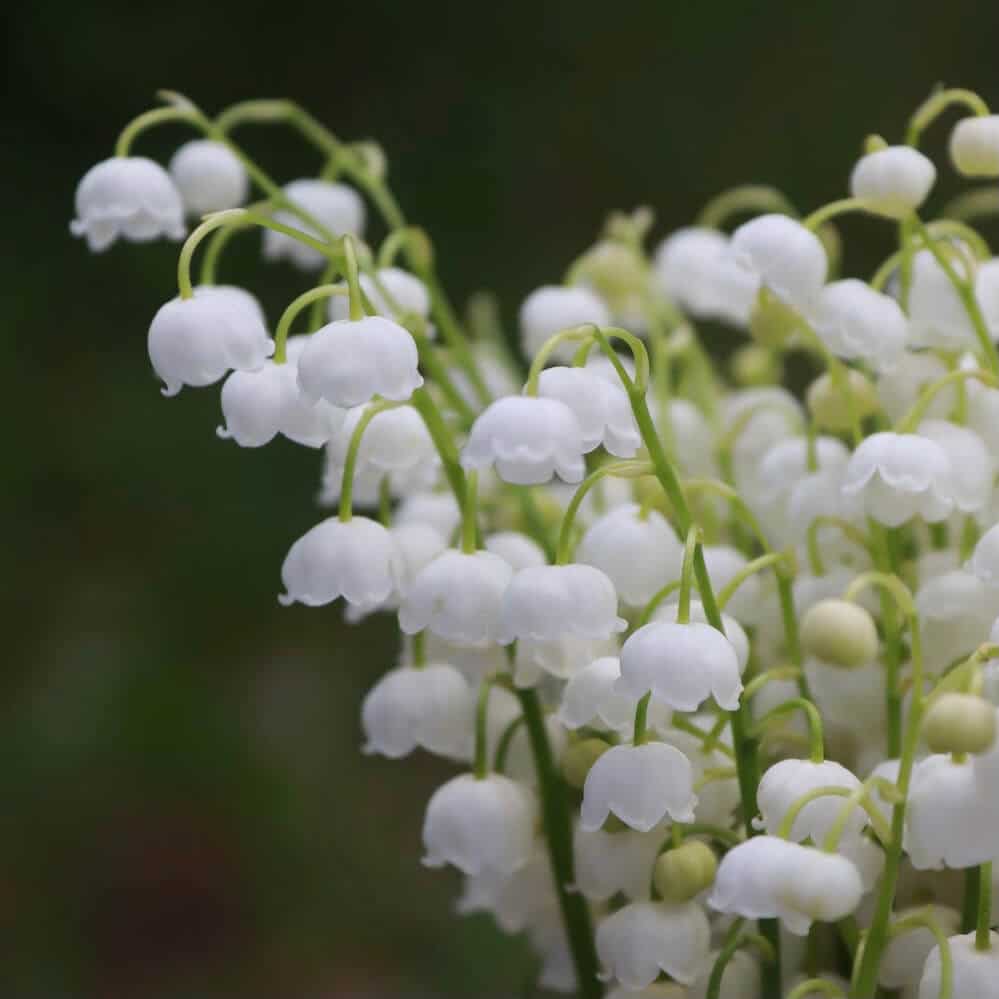
Native to China, the May lily of the valley symbolizes the return of sunny days, but also the return of happiness in the language of flowers. Given on May 1st to mark Labor Day, it serves to celebrate the new season.
Steeped in myths and symbols, it is the flower we give to herald both bountiful harvests and good fortune.
In fact, as early as the Belle Époque, Christian Dior made it the emblem of his prestigious fashion house.
Also known as “Lily of the Valley,” this white flower resembles small, fragrant bells.
The quintessential floral note, lily of the valley is primarily used in perfumery, particularly as a heart note, but rarely in its natural form, as it is impossible to extract essential oil from this extremely delicate flower. It is therefore referred to as the “silent flower.”
According to Greek mythology, Apollo is said to have covered the ground of Mount Parnassus with these delicate flowers so that the Muses would not hurt their feet, which is also how it earned the name “Parnassian Grass.”
The first perfumes based on lily of the valley were: Muguet des Bois by François Coty, created by perfumer Henri Robert, followed by Muguet du Bonheur by Caron. Diorissimo, a soliflore fragrance, was also a huge success.
Lily of the valley can also be found in the following perfumes: Anaïs by Cacharel, Givenchy III, Eau de Campagne by Sisley, and the very famous Beige by Chanel.
The expert's opinion
Lily of the valley is used sparingly in perfumery.
Its green, fresh, clean, floral scent—almost sunny and delicate—allows for the creation of fragrances with floral, feminine sillage of remarkable softness.
Despite its innocent appearance, lily of the valley is not edible.
You can find this note in our fragrance organ to help you create your own personal perfume.