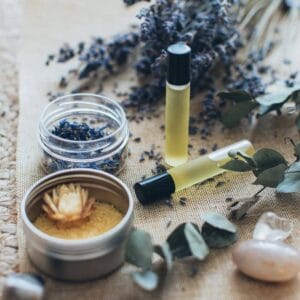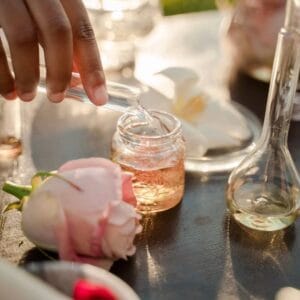
Creating a perfume involves numerous chemical and creative processes. Behind every fragrance lies a genuine artistic vision. In short, a perfume can be considered a true work of olfactory art.
It is through personal taste, expertise, and originality that a perfumer creates a fragrance based on specific notes, each of which has its own place in the olfactory pyramid.
We speak of top, middle, and base notes, which, when blended, form the fragrance’s composition.
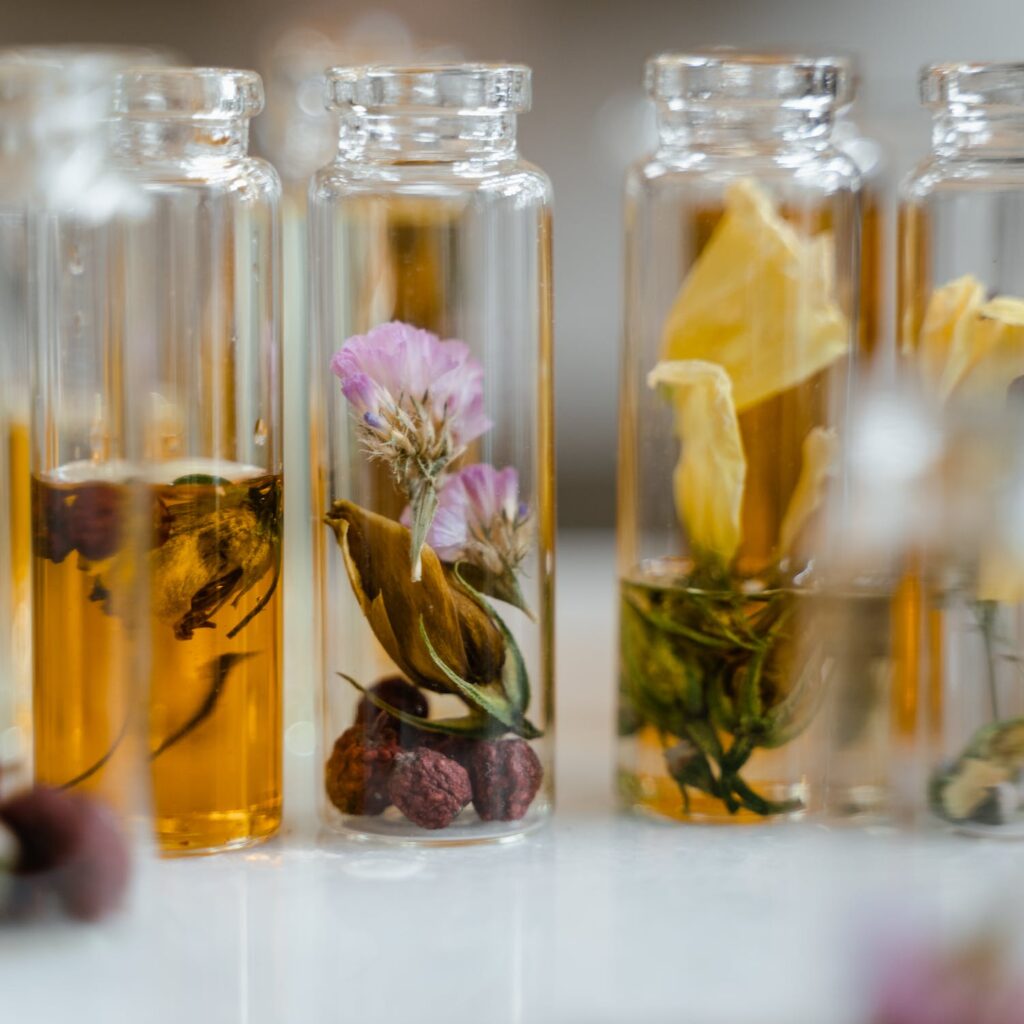
Top notes are the most volatile. They are the first scents you notice when you open a bottle or spray a little perfume on yourself. They are often fresh and light, such as bergamot, green tea, or cardamom.
Heart notes take a little longer to reach the nose, usually a few minutes to a few hours. These are the notes that truly define the character of the fragrance and its direction… is it more woody? Floral? Oriental?
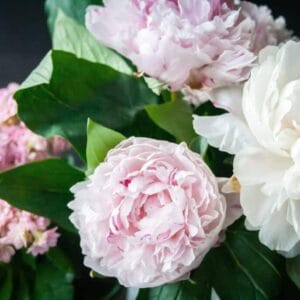
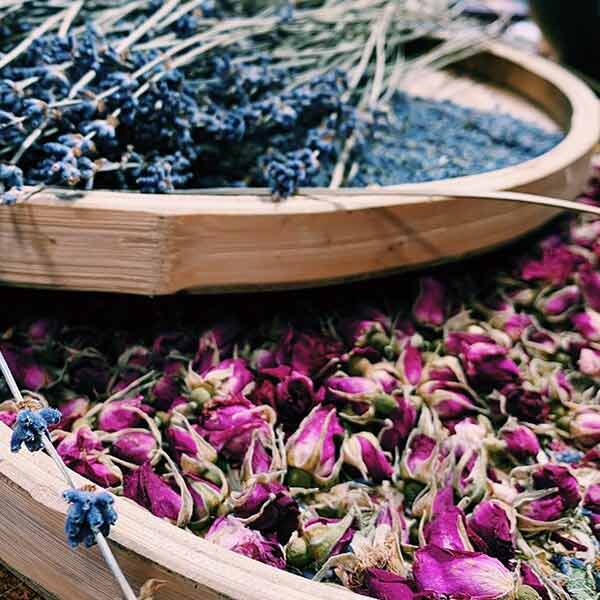
Among the heart notes are fig, rose, lily of the valley, peony, and so many others…
Base notes form the foundation of the fragrance. These are the notes you can smell on your clothes or skin at the end of the day, for example. They are heavier, often more intense and heady, such as oud, patchouli, musks, or sandalwood.
These notes, which form the fragrance’s base, are either natural or synthetic.
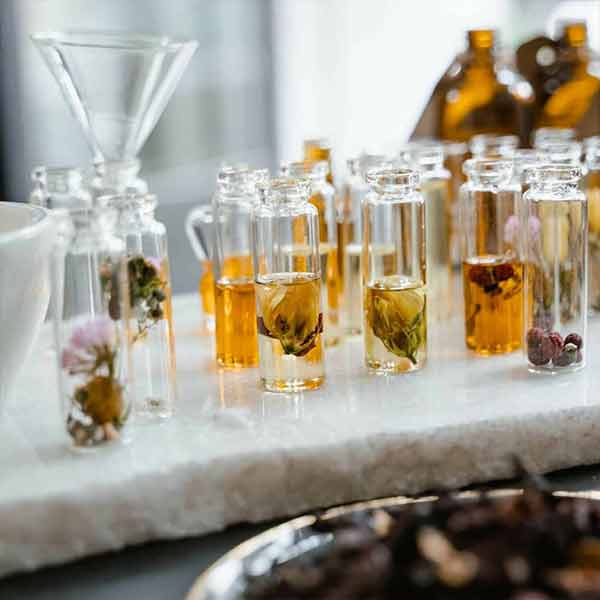
There are several techniques for extracting scents from natural raw materials, the most common of which are distillation, extraction, expression, and enfleurage (hot and cold).
Distillation is frequently used in perfumery. The idea is to create scented water vapor from plant materials. This is followed by decantation; the water and the various fragrant components are separated to obtain what is known as an “absolute.”
Extraction involves infusing plant materials in water and a solvent. When the solvent evaporates, a paste-like substance remains, which can be diluted with alcohol to make a perfume.
Extraction is a technique typically reserved for fruit peels. The peels must be pressed, decanted, and filtered to recover the aromatic compounds of interest.
Enfleurage is a technique that has been used since ancient times. The process relies on the use of a fatty substance that naturally absorbs scents. The flowers placed in contact with the fat are then replaced when they lose their scent, and this continues until the fatty substance’s capacity to absorb fragrance is saturated. Enfleurage can take up to 3 months, and 1 kg of fat can absorb up to 3 kg of fragrance from plants. However, this technique is not suitable for the most delicate flowers. Therefore, hot enfleurage is used for those that can withstand it, and cold enfleurage (a practice still widespread in Grasse) for particularly sensitive flowers.
When it is very difficult, or even impossible, to source certain natural notes, perfumers turn to synthetic alternatives, which enrich and complement the most well-known notes.
The “pure” essence is then diluted with varying amounts of alcohol, depending on the desired product (perfume, eau de parfum, eau de toilette, etc.).
The fragrance must then macerate for about two weeks; this is an essential step to give the fragrance its full strength. During this time, the notes blend well and balance each other out to create the most harmonious fragrance possible.