“In the Land of Fragrance”
Perfume is deeply intertwined with French history.
During the Ancien Régime, under the reign of Louis XV, etiquette dictated the use of a different perfume every day. To be at the cutting edge of fashion, one had to wear a powerful scent. Oud, an animal-derived raw material, was highly sought after for the personal hygiene of the nobility, who, at the time, were not particularly fond of water.
His successor, the world-renowned King Louis XVI, was also a devoted lover of the art of fragrance and continued to promote the art of perfume from the court of Versailles to the present day.
As a token of Louis’s love for his wife, Marie Antoinette, he gifted her—among other things—the iconic Petit Trianon, a garden where she could delight in her favorite flowers. This gift also reflected the olfactory trends of the time, when nobles sought the exclusive use of flowers, which were synonymous with freedom, lightness, and above all, good health. This period was marked by a resurgence of interest in pharmacopoeia, influenced by the widespread use of Queen of Hungary water (Catherine de’ Medici) at court 100 years earlier.
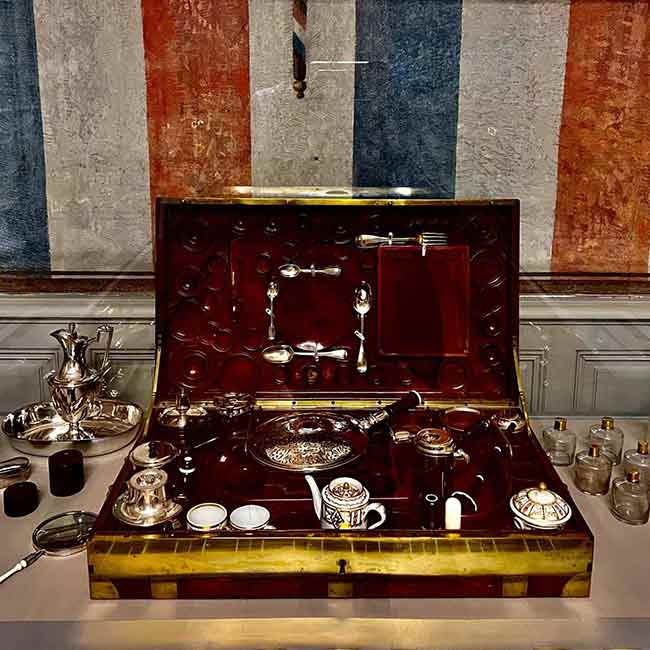
Travel kit belonging to Marie Antoinette, 1791, Paris. Acquired by the International Perfumery Museum in 1985.
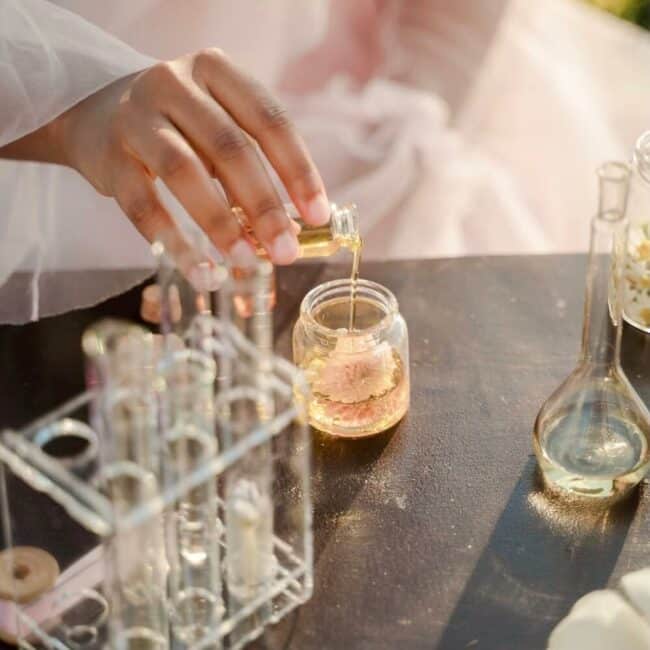
Perfume is deeply rooted in France’s heritage, certainly linked to its history, but above all to its time-honored craftsmanship, which developed from Montpellier to Grasse and on to Paris through the legacy of Fargeon, His Majesty’s glove-maker and perfumer.
This expertise, perpetuated in the contemporary world, has earned the sacred region of Grasse international renown since 2018: “UNESCO Intangible Cultural Heritage of Humanity for the cultivation of perfume plants, knowledge of natural raw materials, their processing, and the art of perfume composition.”
This historical, geographical, and technical influence has enabled the democratization of perfume over time.
In the early 20th century, French fashion houses began to regard perfume as an accessory in its own right.
“Fragrances can dress us up, strip us down, or serve as the finishing touch to our ensemble.”
Paul Poiret was the first to combine perfumery with his fashion house. He was followed by Chanel with its famous No. 5, Joy by Jean Patout, and many others.
The art of fragrance is now an integral part of luxury brands, which use and market it to convey their magical message.
Just like contemporary France, the world of perfume is diverse, drawing inspiration from both its history and its multicultural present. This enthusiasm for diversity, inclusivity, and innovation fosters creativity, particularly through small, creative companies. It also helps preserve France’s olfactory heritage, notably through an organization: the Osmothèque, the first and only perfume conservatory in history, which has been working since 1990 to protect and catalog both discontinued and current fragrances.
Le Studio des Parfums contributes directly to the preservation of this heritage by sponsoring the perfume “Je reviens” by Worth 1932; this is our way of supporting the Conservatory in its missions.
Yours olfactorily,
Le Studio des Parfums, custom perfume creation.