Today, we explore the unique vocabulary of perfumery, a world that is both complex and delicate, and closely linked to the world of music.
TOOLS USED IN OUR WORKSHOPS
Beaker
This versatile container is ideal for various tasks, such as stirring and preparing mixtures. At Studio des Parfums, we provide you with a beaker so you can create, observe, and smell your fragrance at every stage of the formulation process.
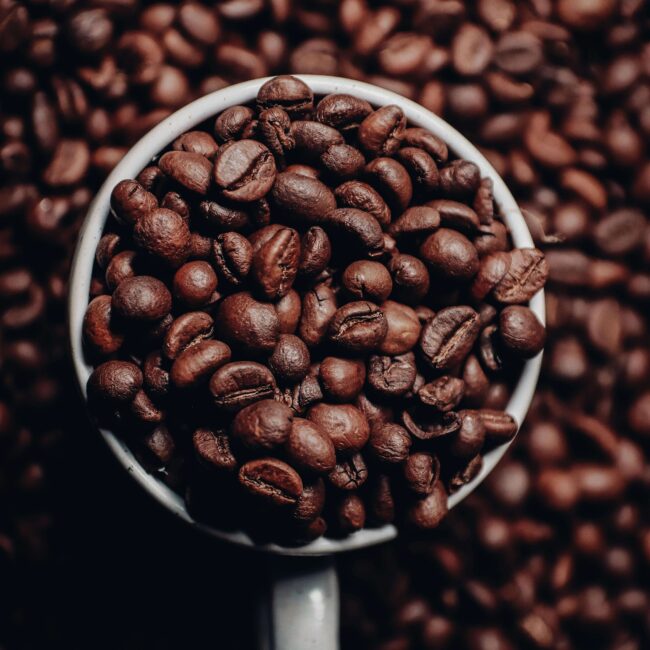
Coffee beans
Available during our perfume-making workshops, coffee beans offer a familiar scent that helps the brain focus on a single odor, thereby enhancing the detection of new, complex olfactory nuances.
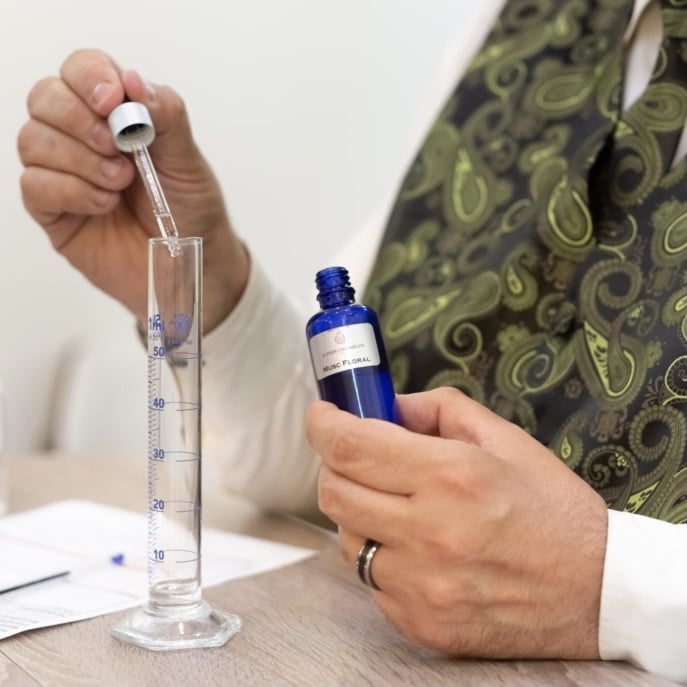
Measuring cylinder
Used in the laboratory to measure liquid volumes, the measuring cylinder allows you to precisely follow the quantities recommended by our perfumer, ensuring the harmony of your fragrance.
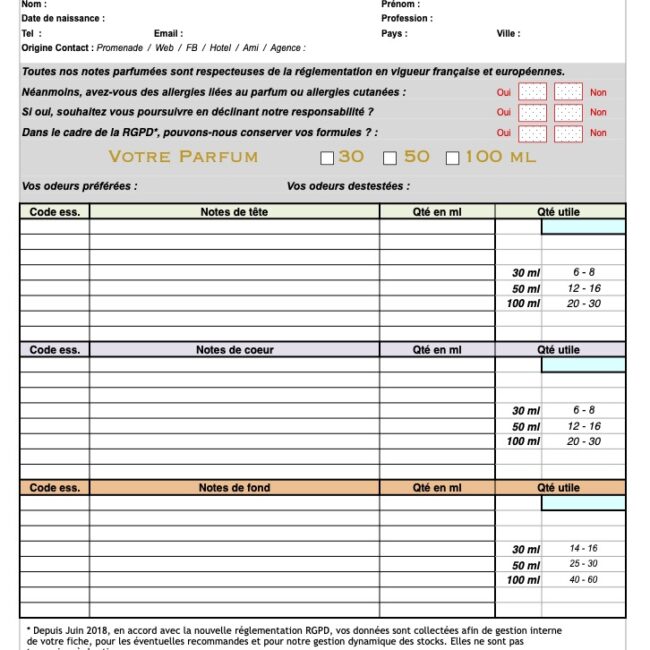
Fragrance Creation Sheet
Provided during our perfume-making workshops, this sheet allows you to list every note in your fragrance. At the end of the workshop, we carefully keep this sheet so that we can recreate your fragrance exactly as it is if you ever wish to order it again.
Scent strip
A scent strip is a strip of paper designed to allow you to smell a fragrance and track how it evolves over time.
KEY CONCEPTS
Note
In perfumery, a note refers to a scent that can describe a “facet” of a fragrance. They can be classified into three categories: top notes, middle notes, and base notes.
Top Note
Top notes are the first scents you perceive when you spray your perfume. More volatile than the others, they last only a few minutes before fading.
Middle Note
Middle notes form the “heart” of the fragrance—in other words, its personality. They consist mainly of fruits and flowers.
Base Note
Base notes are the heaviest. They form the foundation of the fragrance. These notes evolve throughout the day and linger for a very long time on the skin and clothing.
Fragrance Blend
The result of combining several fragrant ingredients.
Formula
A list of all the notes used in the creation of a fragrance.
Fragrance family
Fragrance families classify scent notes based on their characteristics: woody, chypre, leather, floral, fougère, citrus, and oriental.
Fragrance pyramid
A pyramid-shaped representation describing the structure of a fragrance, from light top notes to lingering base notes.
Natural and Synthetic Notes
Extracts from nature or synthetic compounds, used respectively for their unique characteristics or when direct extraction is not possible.
Considered the perfumer’s instrument, this is the piece of furniture where the perfumer arranges their raw materials to create unique compositions. At the Studio, our perfume organ, featuring over 100 notes sourced from Grasse, guarantees you an unforgettable experience.
Perfume
A perfume is a blend of essential oils, water, and alcohol, which may include various natural ingredients such as plants, flowers, or fruits.
Stepping into the enchanting world of Studio des Parfums is like venturing into a realm where every note, every accord, and every element comes together to create unique and unforgettable olfactory experiences.